


7 Signs Your Business Needs a WHS Audit Brisbane

WHS audit Brisbane | 7 signs you need one
Need a WHS audit Brisbane businesses can act on? Learn 7 signs your safety systems need review and how StaySafe Consulting can help.
A WHS system can look fine on paper and still fail when a worker, contractor or inspector asks the right question. That is often when gaps show up: a missing training record, an old Safe Work Method Statement, a risk assessment that no longer matches the job, or a contractor file that has not been checked in months.
A WHS audit Brisbane businesses can use in a practical way is not about catching people out. It is about finding what is working, what is missing and what needs to be fixed before someone gets hurt or a compliance issue becomes harder to manage.
For many Brisbane businesses, the signs are already there. They just get overlooked because day-to-day work is busy. Here are seven clear warning signs that it may be time to bring in an experienced WHS consultant Brisbane businesses can rely on.

When to book a WHS audit Brisbane businesses can act on
A WHS audit is useful when the business has grown, changed work activities, brought on new contractors, had incidents, or simply has not reviewed its systems for some time.
It is also helpful when responsibility for safety has become unclear. In smaller businesses, WHS tasks are often shared between owners, supervisors, admin staff and workers. That can work for a while, but it creates risk when no one has a full view of the system.
A professional Workplace safety audit gives structure to that review. It checks whether your safety arrangements are current, practical and aligned with WHS compliance Queensland requirements.
1. Your safety documents are outdated
Safety procedures should reflect the way work is actually done. If your documents were written years ago, copied from another business, or left untouched after major operational changes, they may no longer protect your workers or your business.
Outdated documents often include:
WHS policies with old roles, names or responsibilities
Emergency plans that do not match the site layout
Plant and equipment procedures that miss newer machinery
Induction material that no longer reflects current hazards
Consultation procedures that are not being followed
The document might look professional, but that does not mean it is useful. A good audit checks whether your WHS documentation is current, understood and used in the workplace.
Practical tip: If a supervisor cannot explain where a safety procedure is kept, when it was last reviewed and how workers use it, the document probably needs attention.
2. You have repeated incidents or near misses
A single incident can happen even in a well-managed workplace. Repeated incidents or near misses are different. They usually point to a pattern.
For example, if workers keep reporting slips in the same area, the issue may not be “workers need to be more careful”. It could be poor drainage, rushed cleaning, unsuitable footwear, poor lighting or no clear reporting process.
Near misses matter because they show where harm nearly occurred. Ignoring them removes one of the best early warning systems a business has.
A WHS audit should look at:
How incidents and near misses are reported
Whether investigations identify root causes
Whether corrective actions are assigned and completed
Whether the same issues keep appearing
Whether workers feel safe to report hazards
Incident investigations should lead to real change. If reports are being filed but the same hazards keep coming back, it is time to review the system.
3. Worker training records are missing or incomplete
Training records are one of the first things many businesses struggle to keep current. Workers may have completed an induction, been shown how to do a task, or received toolbox training, but if there is no record, it becomes difficult to prove.
Missing records can create problems after an incident, during contractor prequalification, or when responding to a regulator or client request.
Common gaps include:
Site induction records not signed or dated
No evidence of refresher training
Expired licences or tickets
Toolbox talks with no attendance records
No verification of competency for high-risk tasks
Training records stored across different folders, emails or systems
A safety advisor Brisbane businesses engage for an audit will not only check whether records exist. They will also consider whether the training suits the actual work and risks.
Practical tip: Choose one place to store training evidence. It should be easy to search, easy to update and accessible to the people who manage WHS.

4. Your risk assessments are incomplete
Risk assessments should help people make safer decisions. If they are too vague, too old or not completed for key tasks, they will not do that job.
Incomplete risk assessments often show up when:
New equipment has been introduced without a review
Work is being done at a new site with different hazards
Controls are listed but not checked in practice
High-risk tasks are not assessed in enough detail
Risk registers have not been updated after incidents
Workers were not consulted during the assessment
A risk register should give clear visibility of the main hazards in the business and what controls are in place. It should not be a document that gets created once and forgotten.
StaySafe Consulting helps businesses review and develop risk registers that are practical, current and suited to the type of work being performed.
5. Your SWMS are unsuitable for the work
Safe Work Method Statements, or SWMS, are often treated as paperwork needed before a job starts. That misses the point. A SWMS should clearly explain how high-risk construction work will be carried out safely.
A SWMS may be unsuitable if it:
Is generic and not site-specific
Lists hazards but does not explain effective controls
Does not match the sequence of work
Has not been discussed with the workers doing the task
Is not available at the work area
Covers equipment or methods that are not being used
Has not been reviewed after a change in conditions
For example, a SWMS for working at heights should do more than mention “fall protection”. It should identify the specific height risk, the equipment being used, inspection requirements, exclusion zones, rescue arrangements and who is responsible for each control.
A WHS audit can identify whether your SWMS are fit for purpose. It can also support SWMS development where documents need to be improved or rewritten.
6. Contractor management is poor or inconsistent
Contractors can introduce significant risk, especially when they work across multiple sites, bring their own equipment or perform high-risk tasks. If the contractor management process is informal, gaps can appear quickly.
Warning signs include:
Contractors starting work before documents are reviewed
Insurance, licences or tickets not checked
No site induction before work begins
SWMS accepted without review
No monitoring of contractor work
Unclear responsibilities between the business and contractor
Contractor incidents not captured in your reporting system
Good contractor management does not need to be complicated, but it does need to be consistent. A business should know who is on site, what work they are doing, what risks they bring and how those risks are controlled.
A WHS audit can test whether the process works in real conditions, not just in a folder.
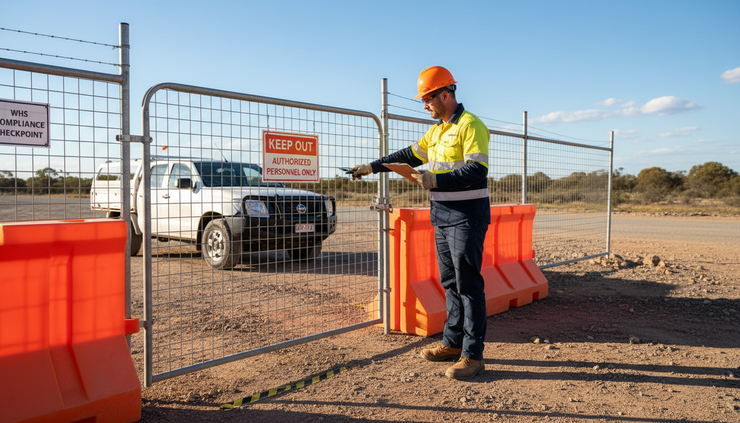
7. You are unsure about your legal obligations
WHS duties can feel difficult to interpret, especially when a business operates across different sites, uses contractors, grows quickly, or moves into higher-risk work.
Uncertainty is a warning sign in itself. If managers or supervisors are not sure what the business must do, safety decisions can become reactive.
Common questions include:
What documents do we legally need?
How often should we review risk assessments?
Do we need SWMS for this task?
What training records should we keep?
What should happen after a near miss?
Are our consultation arrangements enough?
What should we expect if a regulator visits?
This is where practical advice matters. A Workplace health and safety consultant Queensland businesses work with should explain obligations in plain English and help turn them into workable systems.
This article provides general information only and is not legal advice. For specific legal interpretation, businesses should seek advice suited to their circumstances.
What happens during a WHS audit
A WHS audit should be structured, but it should also be practical. The aim is to understand how the business manages safety in the real workplace.
A typical audit may include the following steps.
A review of key WHS documents
This may include policies, procedures, inductions, emergency plans, risk assessments, SWMS, training records, maintenance records, incident reports, meeting minutes and contractor files.
The review checks whether documents are current, complete and suitable for the work being performed.
Workplace inspections
Workplace inspections help confirm whether documented controls are being used. This may include checking access routes, housekeeping, signage, plant guarding, hazardous substances, emergency equipment, working at heights controls, electrical safety, manual handling risks and traffic management.
The inspection should focus on real conditions, not just what is written in a procedure.
Conversations with workers and supervisors
Workers often know where the real safety gaps are. A good audit includes practical conversations with the people doing and supervising the work.
This can show whether procedures are understood, whether training has been effective and whether workers feel comfortable raising safety concerns.
A clear findings report
The audit report should identify strengths, gaps and recommended actions. The most useful reports include priorities, so the business knows what needs attention first.
A long list of issues without context is rarely helpful. Clear findings make it easier to act.
The benefits of identifying safety gaps early
Finding WHS gaps early is far better than finding them after an injury, regulator visit, insurance issue or client complaint.
Early review can help a business:
Reduce the likelihood of incidents and near misses
Improve confidence in safety systems
Clarify responsibilities for managers and supervisors
Strengthen contractor management
Keep WHS documents current and useful
Improve readiness for client or regulator questions
Build safer day-to-day work habits
There is also a practical business benefit. When safety systems are clear, supervisors spend less time chasing paperwork and workers get better guidance on how to do the job safely.
That does not mean every business needs a large, complex safety management system. The right system should fit the size, risk profile and work activities of the business.
How StaySafe Consulting supports businesses across Queensland
StaySafe Consulting provides WHS consulting services Brisbane businesses can use to identify gaps, improve systems and manage compliance in a practical way.
Support is available across Brisbane, the Gold Coast, Sunshine Coast and regional Queensland. This is especially useful for businesses operating across multiple sites or managing mixed workforces of employees, subcontractors and labour hire workers.
Services include:
Workplace inspections
WHS documentation reviews
Risk registers
SWMS development
Incident investigations
Safety management systems
Contractor management support
Practical compliance advice
Guidance on WHS compliance Queensland requirements
The focus is simple: clear advice, useful documents and practical controls that suit the way work is actually done.
StaySafe Consulting can assist with one-off audits, targeted reviews after an incident, preparation for client compliance requirements, or ongoing WHS support.

When a WHS audit is the right next step
A WHS audit Brisbane businesses can rely on should leave you with a clear understanding of your current position and your next priorities. It should not bury you in jargon or create paperwork for the sake of it.
If your safety documents are outdated, incidents keep repeating, training records are missing, risk assessments are incomplete, SWMS are not suitable, contractor controls are loose, or legal obligations feel unclear, now is a sensible time to review your WHS system.
For practical support from an experienced team, contact StaySafe Consulting to discuss a WHS audit in Brisbane or WHS support across the Gold Coast, Sunshine Coast and regional Queensland. A short conversation can help clarify what type of audit or review will best suit your business.


